Psychedelic therapy can sometimes lead to particularly intense emotional experiences. In these moments, a reassuring gesture or simply a physical presence can help create a sense of safety.
But human touch also has its limitations.
Touch… Without Human Contact
In certain therapeutic settings, touch can contribute to a sense of safety and calm. However, for someone who has experienced trauma, for example, physical contact may sometimes feel uncomfortable or distressing.
This is where an intriguing idea comes in: using technology to create a soothing tactile sensation that the person can control themselves.
New therapeutic devices use gentle vibrations felt on the skin, creating a form of “technological touch” without requiring physical contact with the therapist.
How Does It Work?
Worn on the body, the device emits low-intensity vibrations that are felt rather than heard.
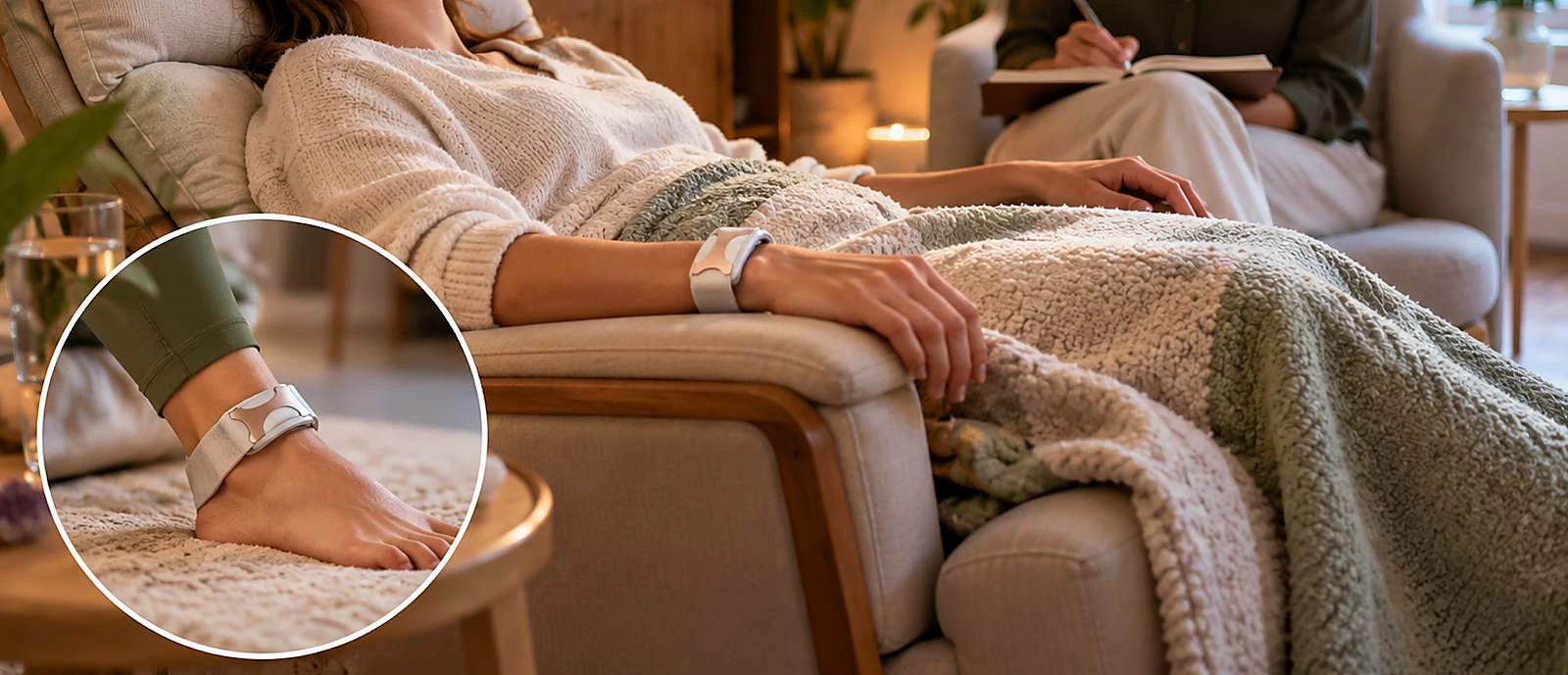
In some applications involving psychedelic therapy, it may be used for around 15 minutes before a session to promote relaxation, and then during the experience whenever the patient feels the need for a sensory anchor.
One of the key advantages is that the patient remains in control: they can activate or adjust the vibrations themselves according to their needs.
The manufacturers of these technologies suggest that certain vibration patterns may encourage slower breathing and influence the autonomic nervous system, particularly its parasympathetic branch, which is associated with rest and recovery.
Apollo Neuro: A Real-World Example
Among the devices exploring this approach, Apollo Neuro is a small wearable device that can be worn on areas such as the wrist or ankle.
It offers different vibration patterns depending on the desired state, such as calm, focus, recovery or sleep. Its developers describe these vibrations as sensory signals designed to help the body transition more easily from a state of tension to a state of calm.
The concept becomes particularly interesting in a therapeutic setting: providing the patient with a sensory anchor that they can control themselves, without requiring physical contact with the practitioner.
When Technology Goes Even Further
These devices are also beginning to incorporate greater personalization. Apollo, for example, is developing features that use artificial intelligence and can be integrated into an ecosystem that includes other devices capable of collecting data on sleep or heart rate.
In the future, we could imagine technologies capable of adapting their stimulation according to certain physiological parameters of the patient.
The device would then no longer simply measure the body: it could also respond to it.
A New Avenue for Therapists?
These technologies are still emerging, and the benefits claimed by their manufacturers require further research. They therefore cannot currently be considered therapies whose effectiveness has been fully established.
What if the wearables of tomorrow were no longer used simply to understand our bodies, but also to interact with them?