

How to Choose a Distance Naturopathy School?
Three criteria make all the difference — the teaching method, the support, and the course content.
Are you currently comparing several distance naturopathy schools? This guide helps you ask the right questions before you enrol — with us or elsewhere.
Three Criteria for Choosing the Right School
These are the three areas where good distance training truly stands out.
Teaching Method
Training genuinely designed for e-learning.
Support
Personal access to instructors and academic guidance.
Content
A structured, in-depth program tailored to your professional goals.
1. Teaching Method: Not All Online Courses Are Equal
The term "online training" covers very different realities from one school to the next. Before comparing price or duration, it’s worth understanding how the content was actually designed.
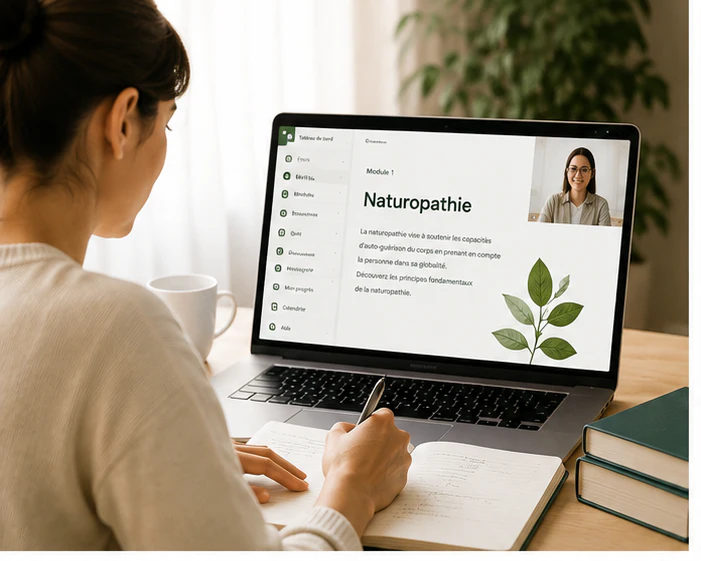
What Makes a True E-Learning Program?
A well-designed e-learning program is built around how distance learning actually works: short, structured modules, built-in assessments, written resources you can consult at your own pace, and a progression designed for independent study rather than recreating a classroom on screen.
A Filmed Classroom Lecture Isn't Necessarily E-Learning
Some schools actually offer recordings of in-person lectures, simply uploaded online. That's not the same experience: the pace, the silences, the exchanges with a live group, and the lack of interactivity designed for the screen all produce a very different result from a module built from the ground up for self-study.
Neither approach is inherently bad — but they require a different level of investment from you, and it's fair to know which one you're being offered before you enrol.
Video Has Its Place — Used the Right Way
Instructional video belongs in the mix, as long as it's one tool among several: short, focused on a specific concept, and paired with written resources and assessments. A program made up entirely of long videos, with no written support or interactivity, limits how you can learn and review.
A Simple Question to Ask Before You Enrol
Ask the school: "Were your courses designed specifically for distance learning, or are they recordings of in-class lectures?" The answer — and how clearly it’s given — already tells you a lot.
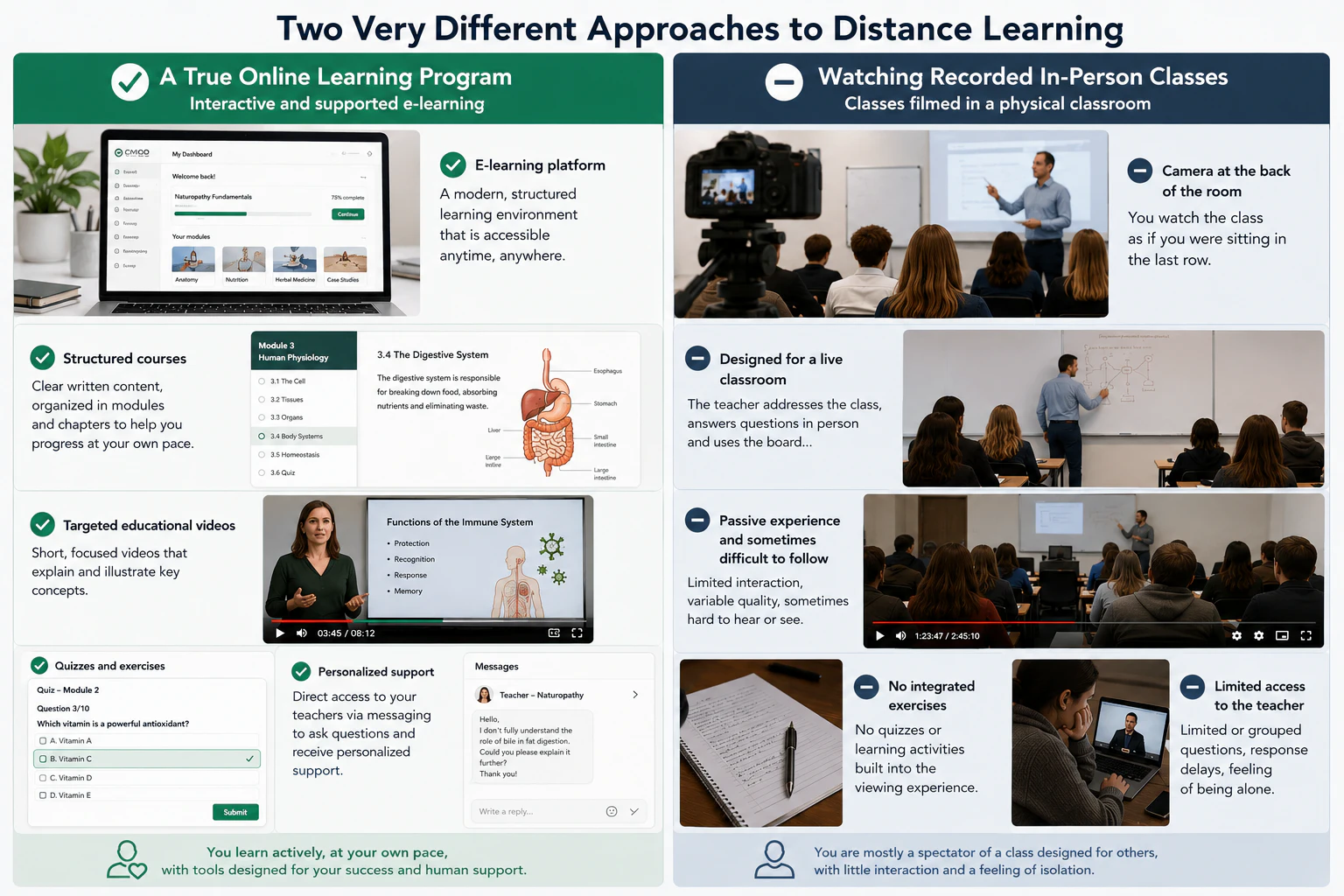
Figure 1 — Two very different approaches to distance learning.
Support: Distance Learning Should Never Mean Learning Alone
The flexibility of distance learning is a real advantage — but it shouldn't come at the cost of isolation. Academic support is often what separates a good distance-learning experience from a frustrating one.

Can You Reach an Instructor Personally?
Beyond a general forum or a shared inbox, is there direct access to an instructor or tutor who can answer your questions about the actual course material? That’s a real difference between "studying alone with videos" and "being supported through your studies."
Technical Support and Academic Guidance Aren't the Same Thing
A technical team that resets a password or fixes a glitchy platform is useful, but it isn't academic guidance. Real guidance means the person answering you knows the material, can explain a concept a different way, or help you work through a clinical case.
Questions to Ask the School
- Do I have a dedicated tutor or instructor, or am I directed to a generic "support" line?
- What's the typical response time for a question about the course material?
- Is support included, or is it a paid add-on?
Course Content: Look Beyond the Number of Hours
The number of hours advertised gives you a sense of volume, not quality. Two programs with a similar duration can offer very different levels of depth.
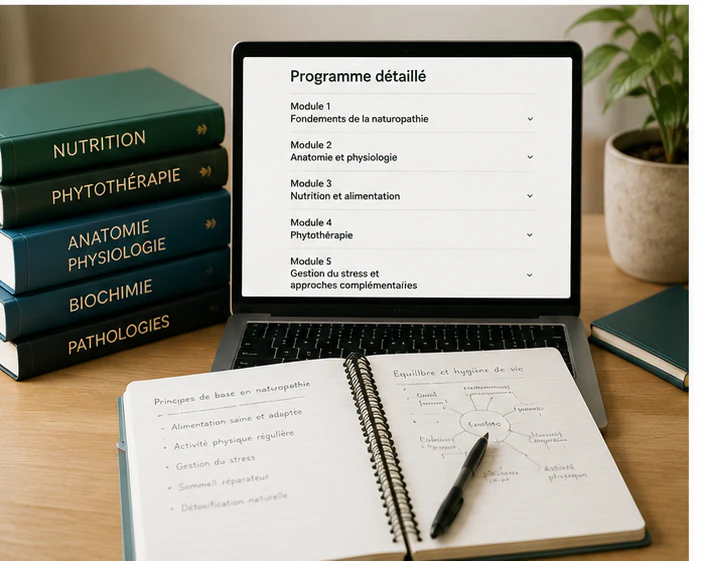
Review the Detailed Curriculum
A reputable school will show you the detailed course plan — the subjects covered, their order, and the pedagogical logic that connects them — before you even enrol. If that information isn't easy to find, ask for it directly.
Check the Depth, Not Just the List of Subjects
A list of course titles tells you nothing about their actual content. Is each subject covered in depth, with case studies and practical application, or just touched on? The difference shows up in the structure of the program, not in its table of contents.
How to Compare Two Distance Naturopathy Schools?
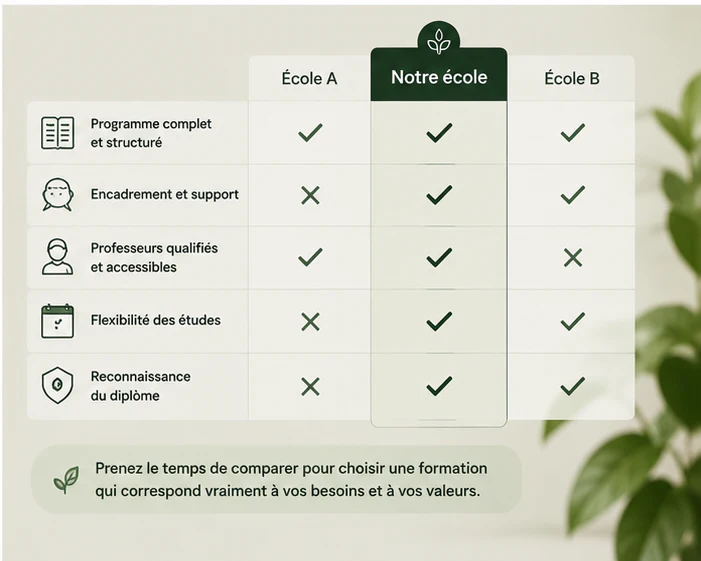
Before you commit, take the time to build your own comparison. Here are the criteria worth checking systematically, school by school.
Teaching Method
Were the courses designed specifically for e-learning?
Platform
Is there a genuine online learning environment?
Videos
Are they instructional videos, or mostly recordings of in-person classes?
Interactivity
Are there quizzes, exercises, and assessments?
Documentation
Is there written course content and a resource library?
Instructors
Can you communicate personally with an instructor?
Support
Is there academic guidance available?
Program
Is the detailed course content available before enrolment?
Progression
Do the subjects follow a logical sequence?
Assessment
How is your knowledge evaluated?
Languages of Instruction
Is the program offered in both French and English?
Try the Platform Before You Commit
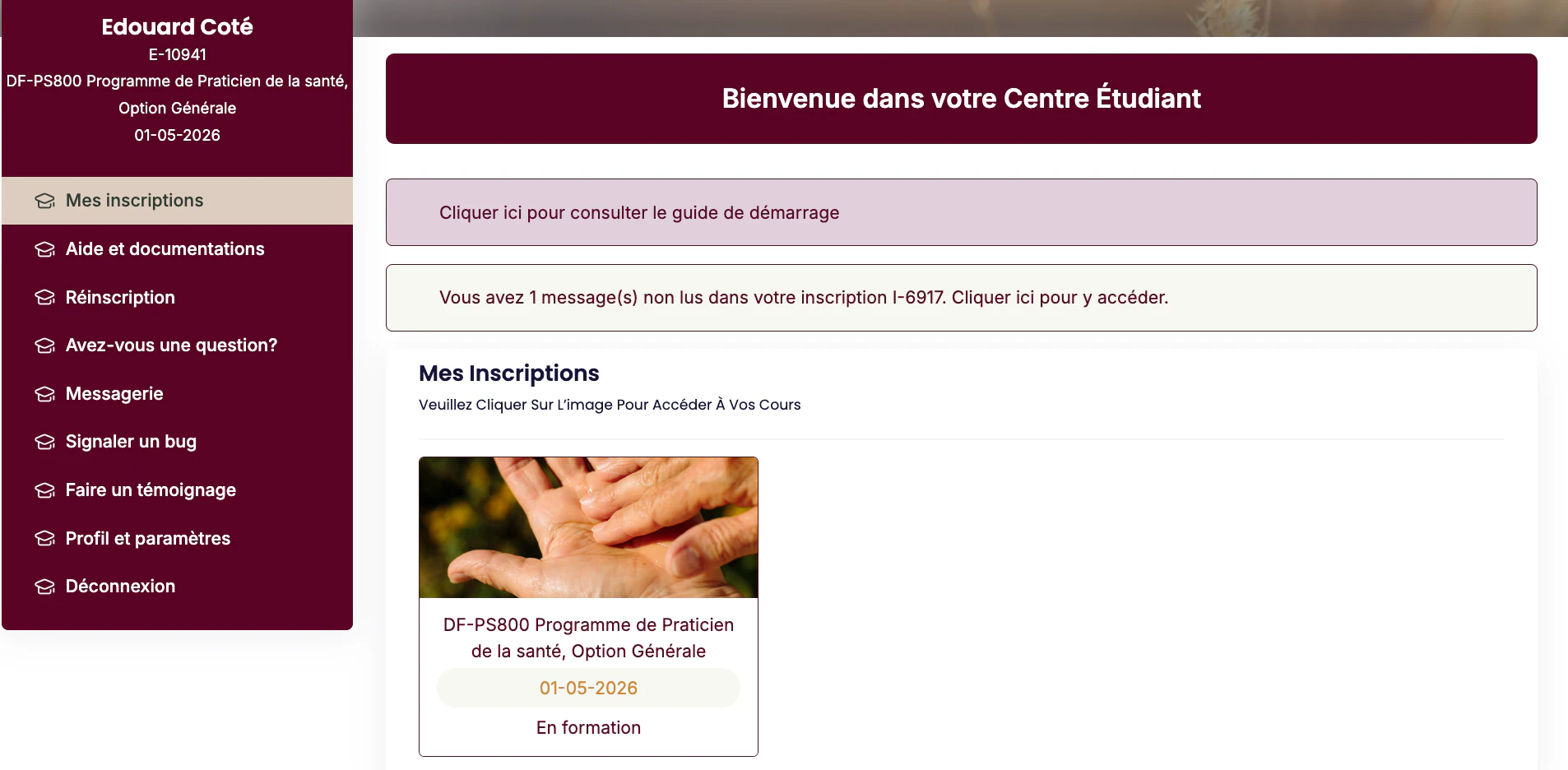
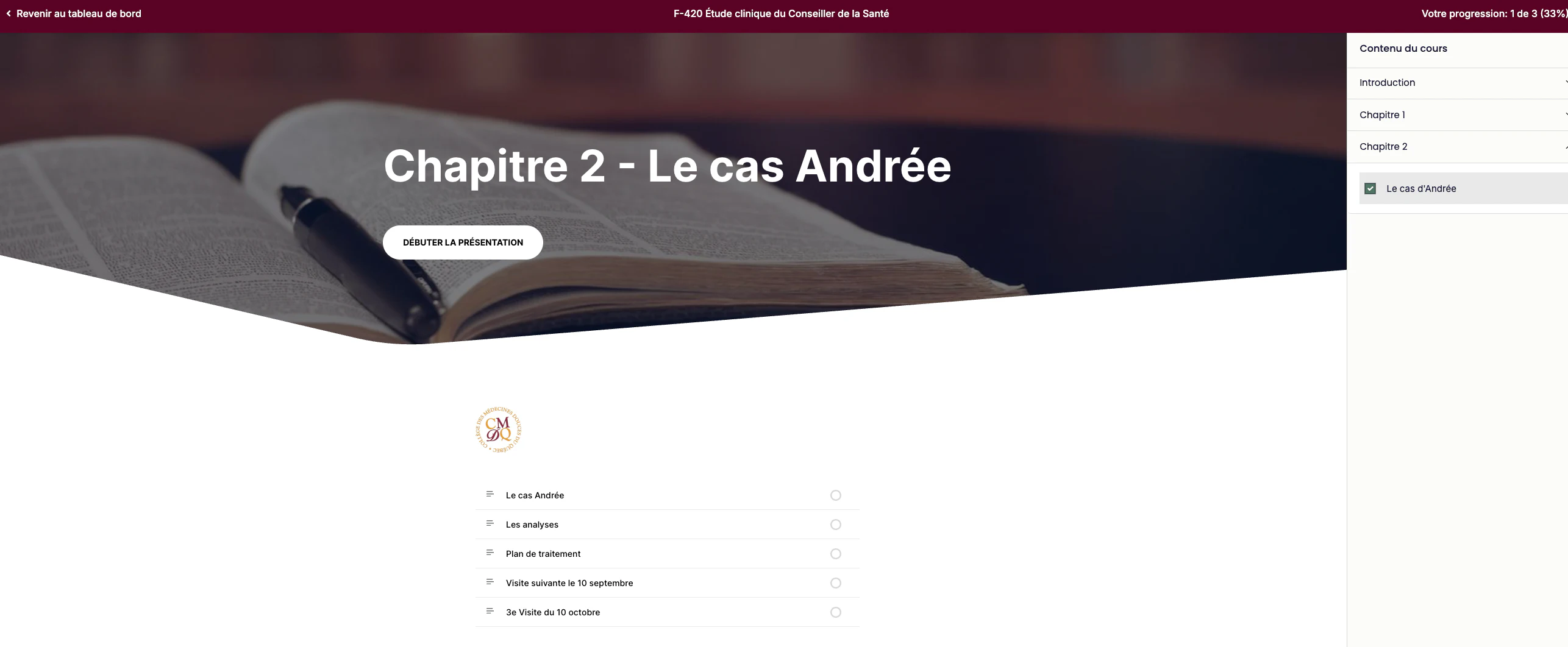
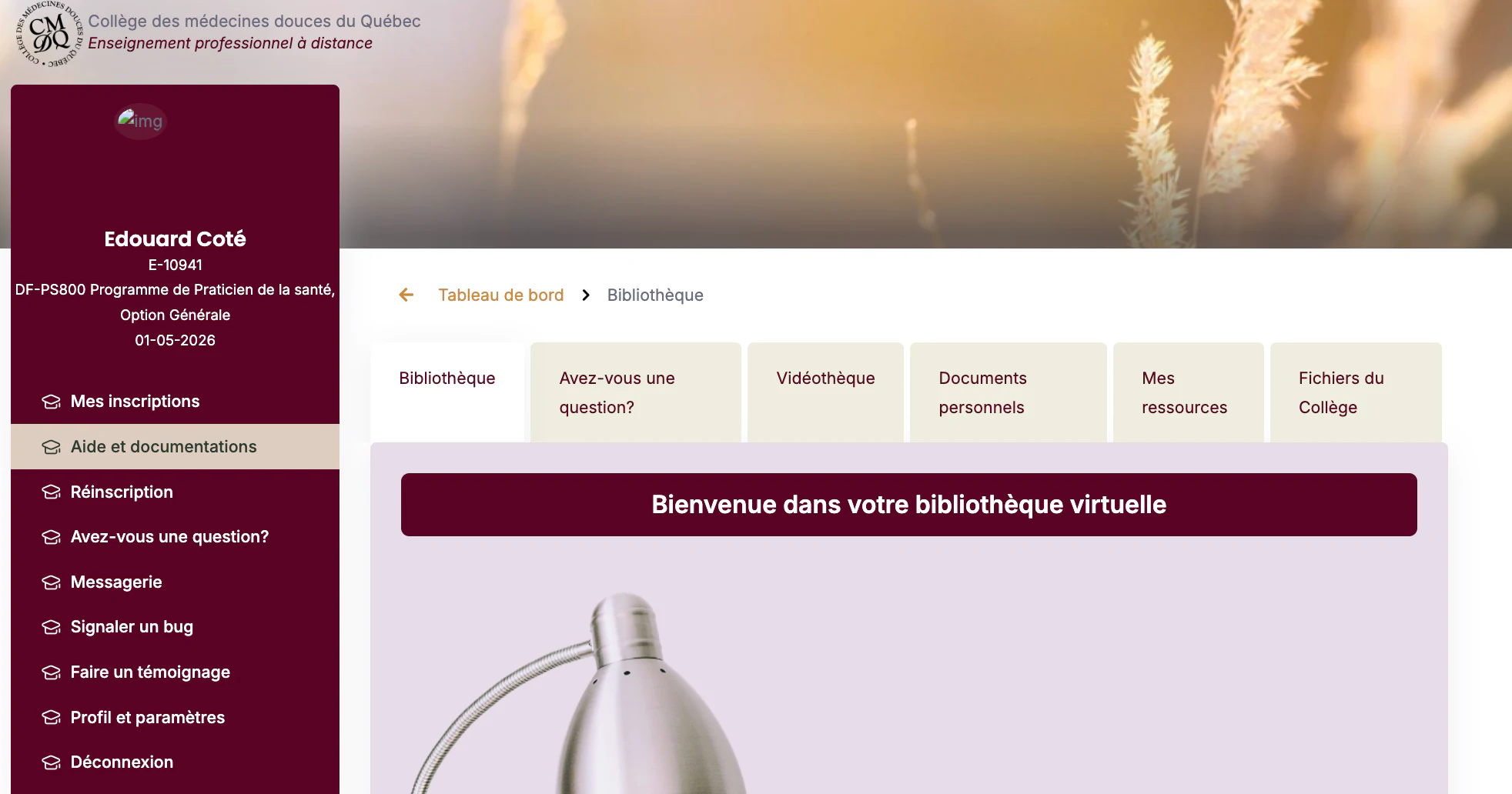
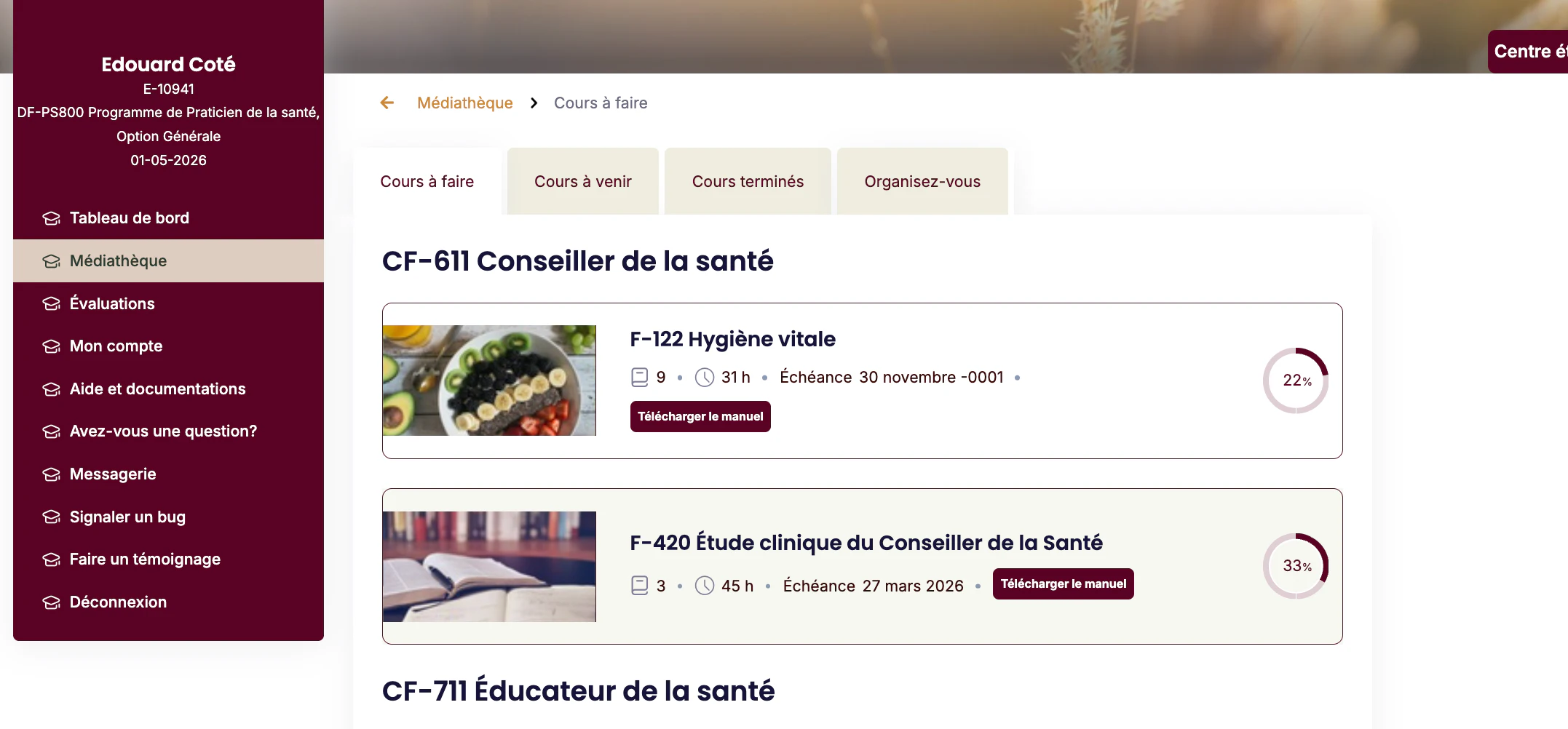
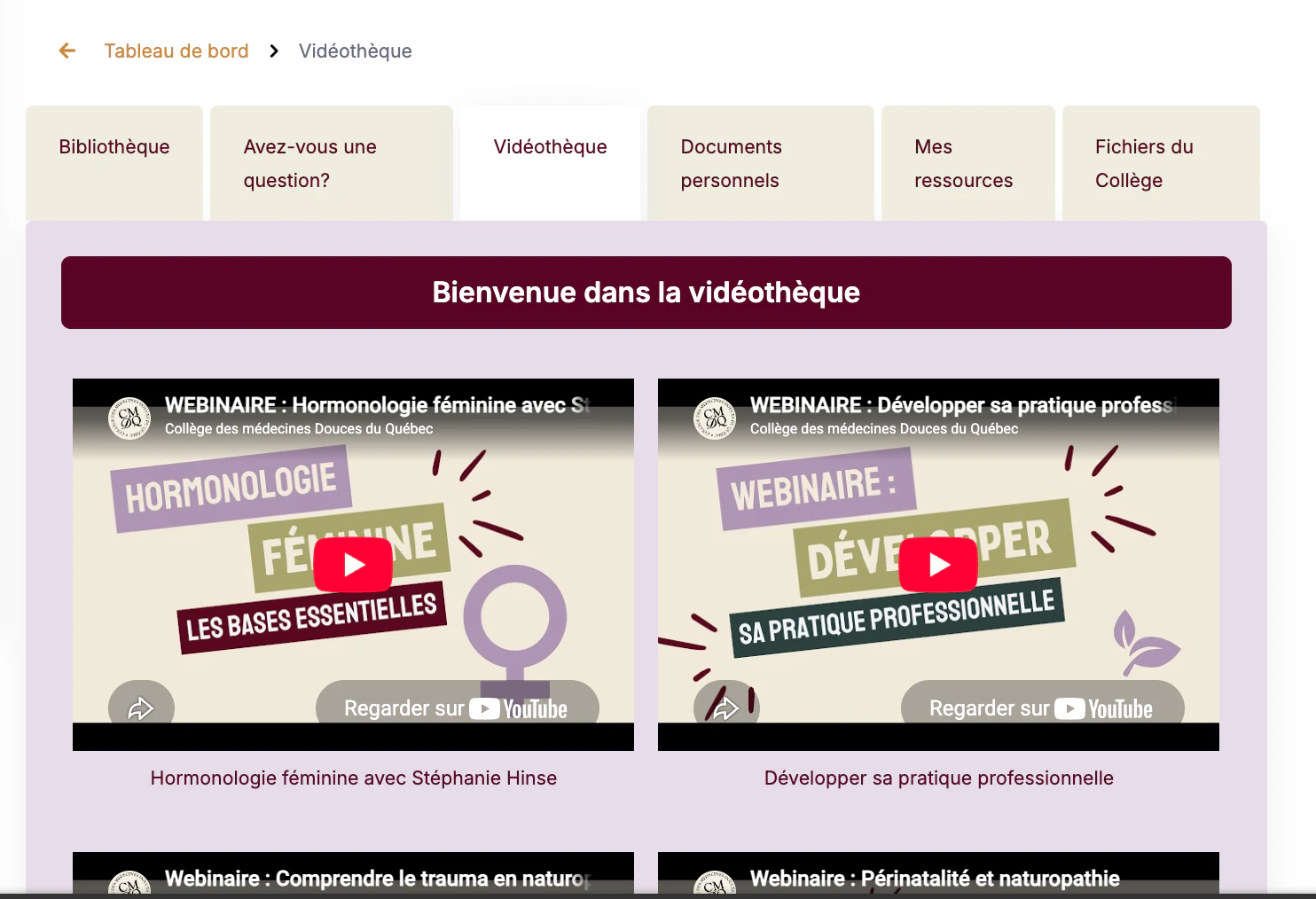
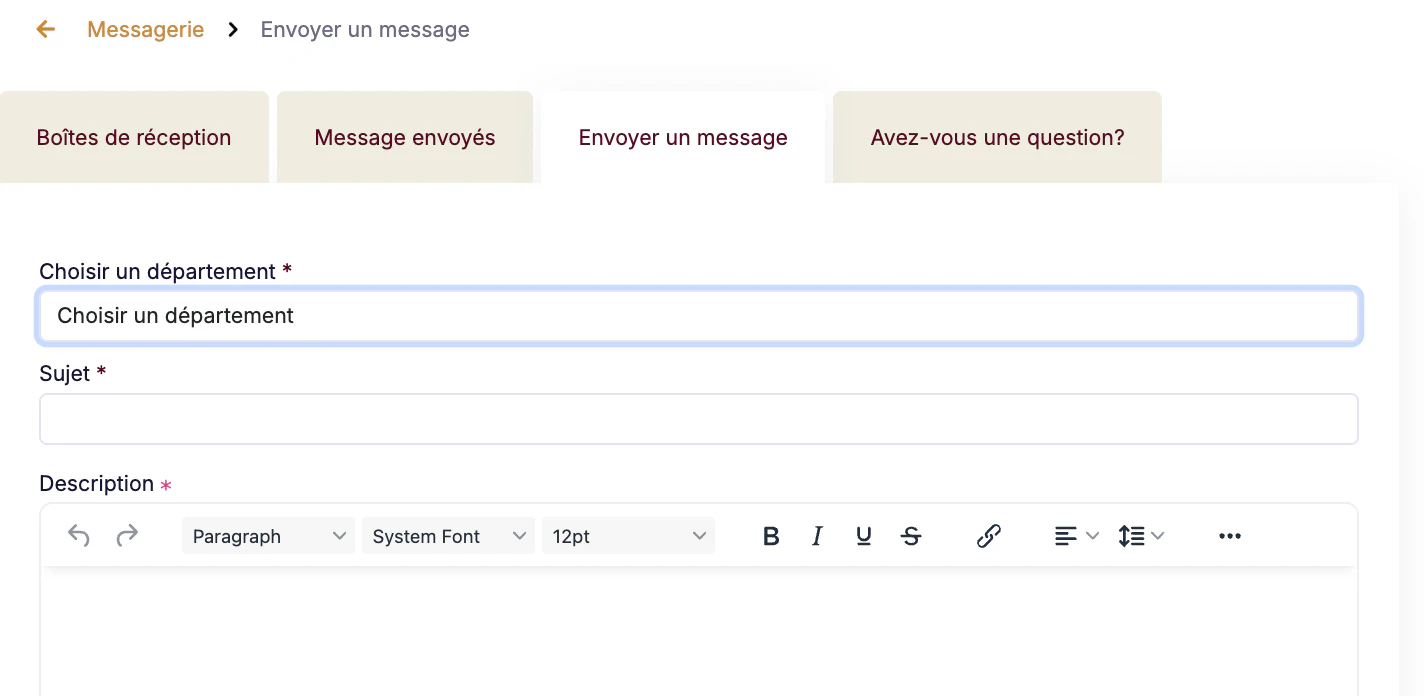
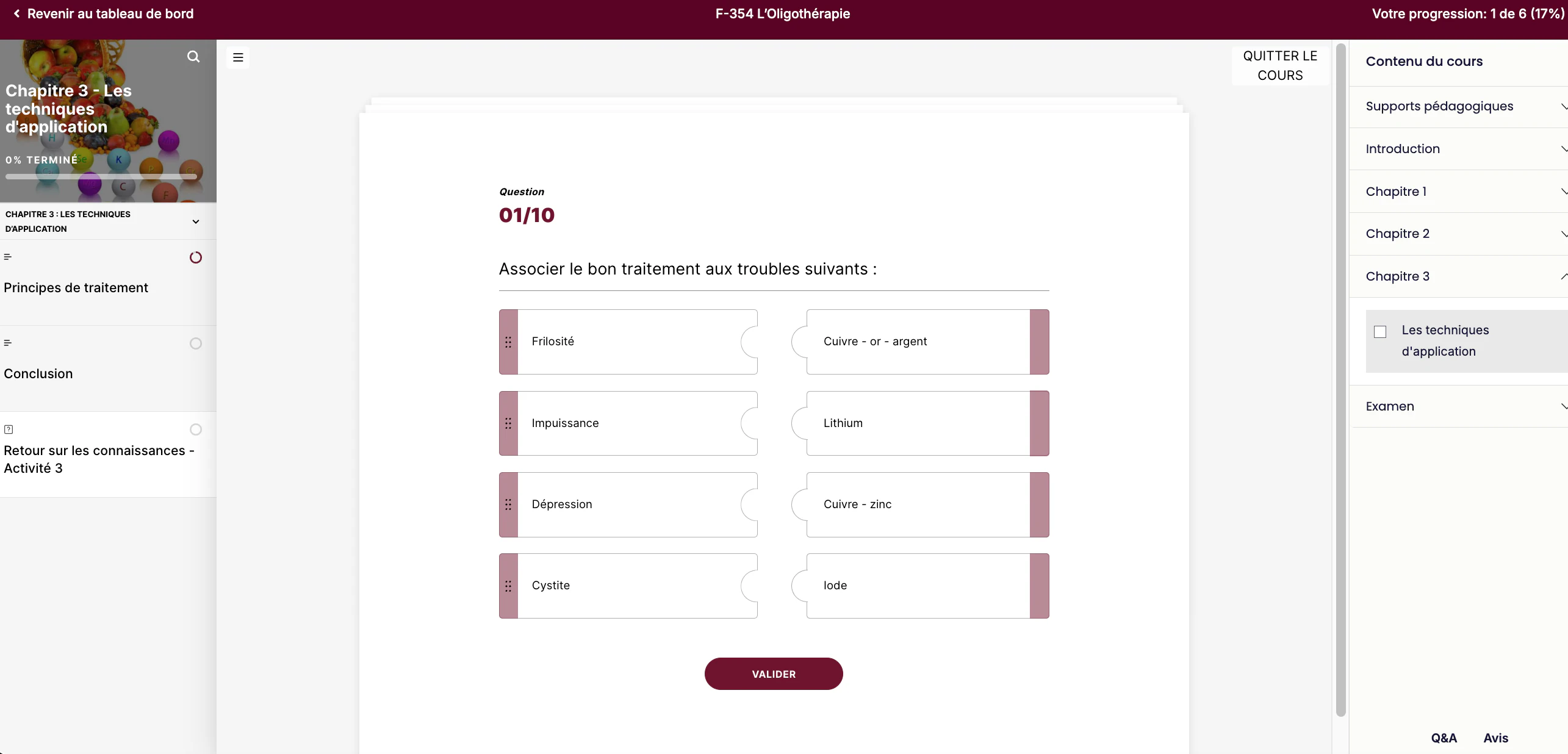
Many people hesitate between schools without ever seeing what the learning platform actually looks like. Yet it's one of the best ways to decide: ask for a demo account, a guided tour, or screenshots the school is willing to share. You'll quickly know whether the environment suits you — before investing time and money.
You can also check out our distance learning method to see exactly how the CMDQ's learning environment works.
A look at the platform

What's the Best Distance Naturopathy School?
There’s no universal answer to this question — and being wary of a school that claims there is, is usually a good instinct. The "best" school is the one whose teaching method, support, and content best match your professional goals, your schedule, and how you learn.
That's exactly why this guide focuses on criteria rather than a ranking: they're what will let you judge, on your own terms, whether a school is the right fit.
Your Project Deserves Clear Answers
The CMDQ's academic team is here to answer all your questions: program, method, and support. Ready to turn your passion into expertise?
Before You Choose a School, Remember These Three Questions
1. How Will I Learn?
Check whether the program was designed for e-learning or is simply filmed in-person classes.
2. Who Can Help Me?
Make sure you’ll have real access to an instructor, not just a technical support line.
3. What Will I Actually Learn?
Ask for the detailed program instead of relying on the number of hours advertised.