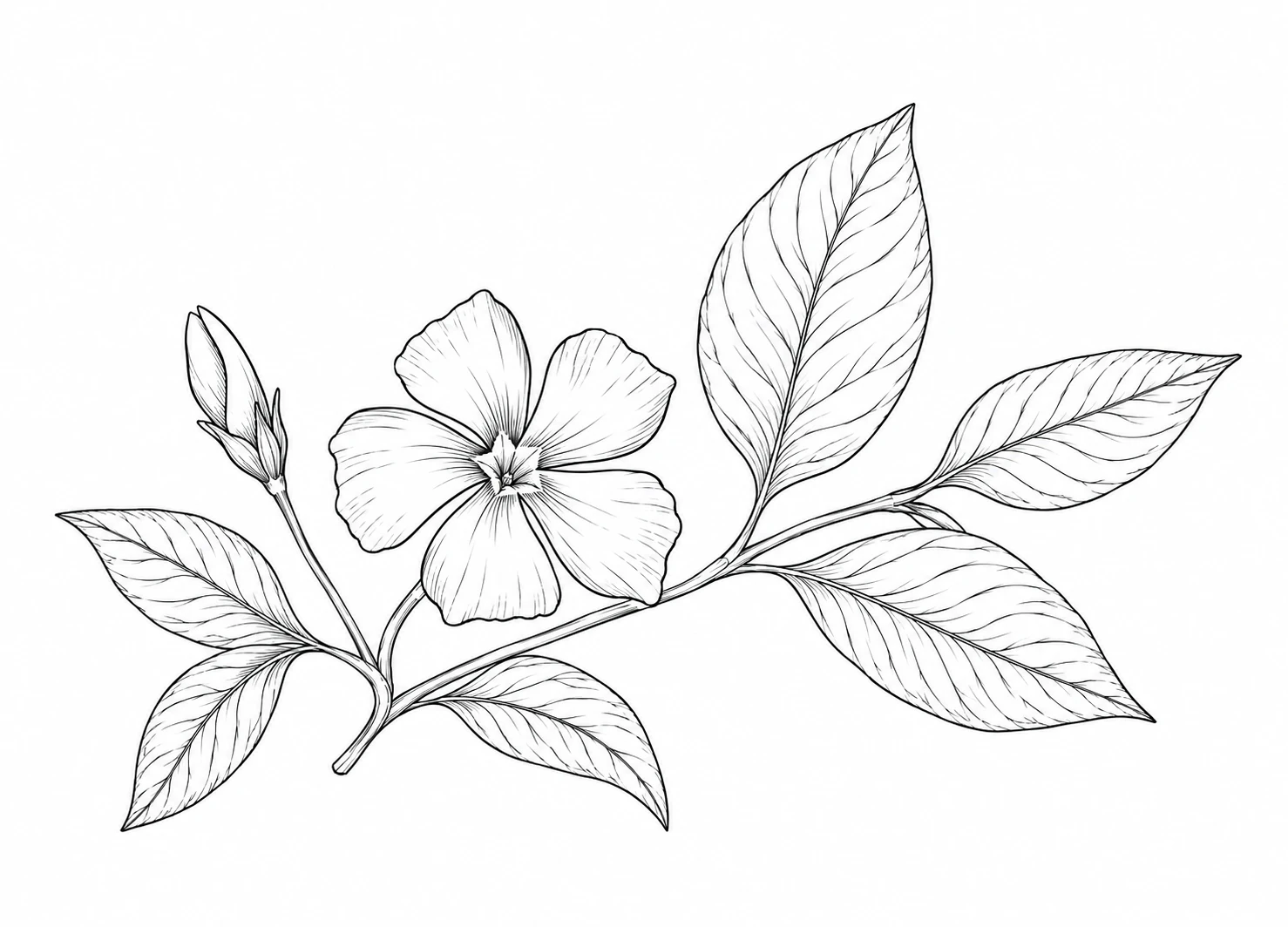
Some plants have remained in the shadows for centuries, preserved mainly through traditional use and a few scattered historical references. Periwinkle (Vinca minor) is one of them. Long used in herbal medicine before gradually falling into obscurity, it is now being rediscovered through gemmotherapy, a branch of herbal medicine that uses the embryonic tissues of plants — buds and young shoots — rather than the mature plant.
Targeted Support for Cerebral Circulation
Periwinkle is traditionally best known for its use in the cerebrovascular system. It is believed to act on cerebral microcirculation and the brain’s electrical activity, which explains its historical use for a fairly wide range of conditions:
- dizziness, particularly symptoms associated with Ménière’s disease;
- emotional and behavioral disorders;
- speech difficulties;
- tremors.
It is also traditionally mentioned as a supportive approach for the after-effects of thrombosis and certain brain injuries, as well as for age-related changes in cerebral metabolism — memory decline, reduced attention, and cerebral arteriosclerosis.
More broadly, herbal medicine traditions also attribute a role to Periwinkle in certain cases of early or sudden hearing loss and vascular tinnitus, as well as migraines and coronary spasms, due to its traditionally described antispasmodic properties.
An Ally for Ocular Microcirculation
Less well known, Periwinkle’s traditional use also extends to ocular health. It has traditionally been used to support blood flow in the small vessels of the eye and has been suggested for certain cases of spastic retinopathy associated with impaired retinal microcirculation.
A Hypotensive and “Purifying” Plant
In traditional herbal medicine, Periwinkle is also described as:
- hypotensive, helping to regulate high blood pressure;
- anti-inflammatory;
- a blood “purifier,” a traditional concept referring to overall support of the circulatory system.
It is important to place these indications in context: they are based on traditional herbal medicine and gemmotherapy uses, which have not been subjected to rigorous clinical trials comparable to those required for medications. The conditions mentioned here — stroke, thrombosis, tinnitus, migraines, and hypertension — are serious health concerns that require medical diagnosis and follow-up.