Healing Waves and Frequency Therapies
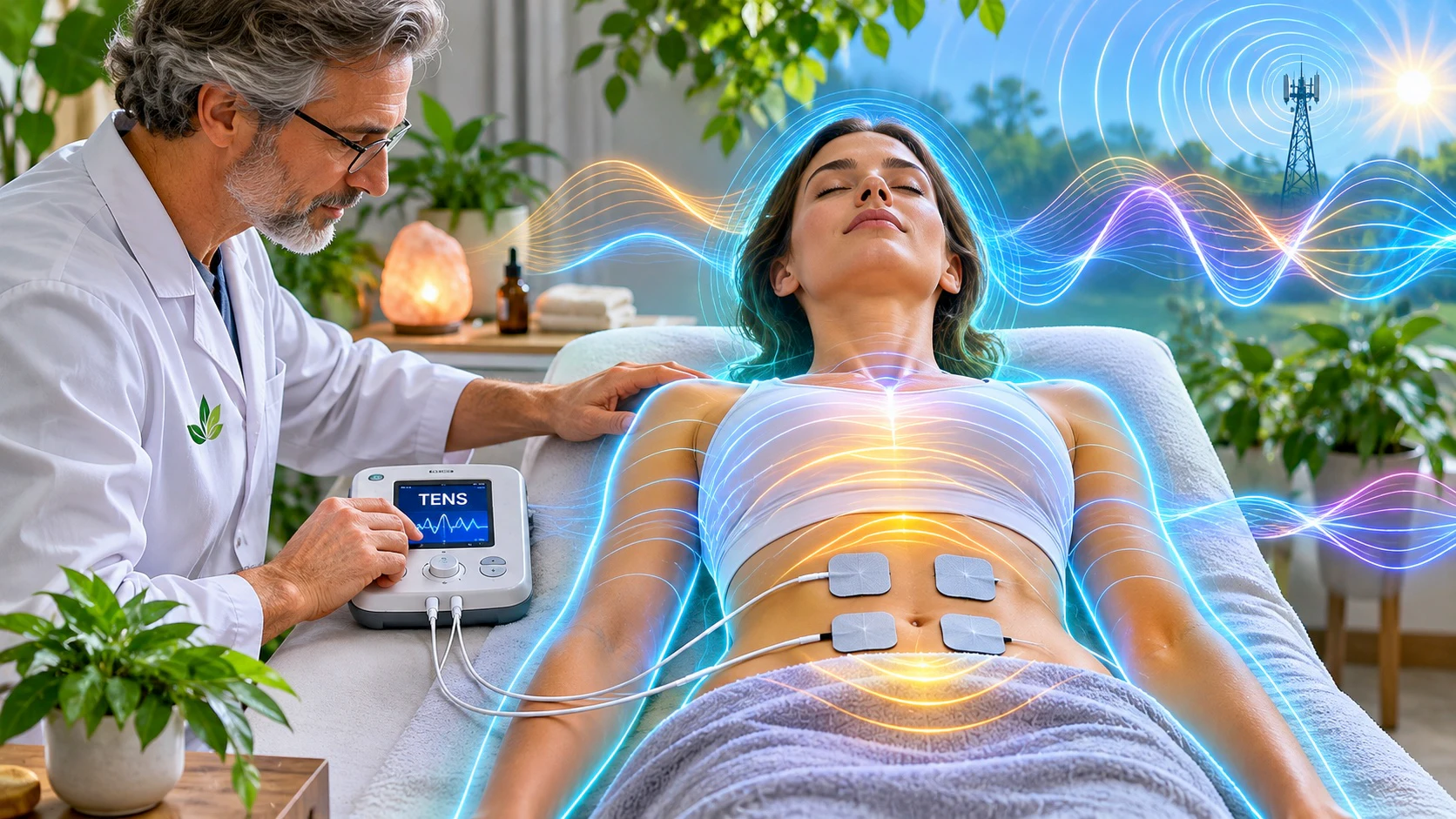
The "Healing Waves and Frequency Therapies" course introduces you to approaches that use electricity, magnetism, sound, vibration and light to support well-being, relaxation and vitality.
You will study their origins, principles, devices and uses: Rife’s work, electroacupuncture according to Voll and bioresonance, pulsed electromagnetic fields, microcurrents, sound therapy, light and colours, as well as traditional energy systems and bioenergetic approaches.
The course emphasizes safety, contraindications, the Quebec legal framework and the critical assessment of devices, so that you can integrate these practices with discernment into naturopathic support that complements medical care and never replaces it.
Course objectives
By the end of this course, you will be able to:
- explain what a wave is and describe its characteristics: frequency, amplitude, wavelength and resonance;
- describe the electrical nature of the human body and the history of vibrational medicine;
- present the main frequency therapies: Rife’s work, electroacupuncture according to Voll, bioresonance, pulsed fields and microcurrents;
- present approaches using sound, vibration, light and colour, as well as bioenergetic approaches;
- recognize contraindications and offer safe support within the limits of your scope of practice.
Teaching methods included:
- E-Learning training: an interactive, motivating, and effective learning method.
- Printable course booklets
- Access to the student centre
- Videos and virtual library.
Course Content Description
Student Guide
Teaching method and instructions
- How to use your E-learning platform
- Your documents and teaching tools
- Your PDF teaching manual
- Clinical Case Studies (CCS)
- Your study time
- Timelines and duration of the program
- Quizzes
- Evaluations
- Professional and personal status
Getting started
- Plan your work schedule
Chapter 1
Waves and frequencies in nature
- A long history of discoveries
- What is a wave?
- Two major families of waves
- Resonance, the key to frequency therapies
- The rhythms of nature and living things
- Schumann resonances: the Earth’s pulse
- The dose: intensity and duration
- Review of knowledge
Chapter 2
Bioelectricity and human electromagnetic fields
- The cell, a tiny battery
- The nerve impulse
- The heart, the brain and the muscles
- Measuring the body’s electricity: ECG, EEG, EMG
- The body’s magnetic fields
- Electricity that repairs
- From measurable signal to vital field
- Review of knowledge
Chapter 3
Origins and theories of vibrational medicine
- Vital force, a very old idea
- Mesmer and animal magnetism
- The golden age of electrotherapy
- Nikola Tesla
- 20th-century pioneers: Abrams, Lakhovsky, Priore
- The contribution of the Russian school
- The main ideas of vibrational medicine
- Review of knowledge
Chapter 4
The work of Royal Raymond Rife
- An extraordinary inventor
- The universal microscope
- A frequency for each microbe
- The 1934 trial and the sidelining
- Today’s devices
- Where do the frequency lists come from?
- What current research says
- The place of these devices in naturopathy
- Review of knowledge
Chapter 5
Electroacupuncture according to Voll and bioresonance
- When electricity meets acupuncture
- Reinhold Voll and EAV
- Taking and reading a measurement
- Medication testing
- Bioresonance and device families
- How a session unfolds
- Uses and state of research
- Review of knowledge
Chapter 6
Magnetotherapy and pulsed electromagnetic fields
- Magnetism, a force of nature
- Static magnets
- Pulsed fields: the principle
- Device parameters
- From research to the hospital
- Well-being uses and a typical session
- Review of knowledge
Chapter 7
Microcurrents and bioelectrical stimulation
- Speaking to the body in its own language
- Three families not to confuse
- TENS, a well-known cousin
- Microcurrent therapy (MET) and cranial electrotherapy stimulation (CES)
- Frequency-specific microcurrent (FSM)
- Methods of the Russian school
- How a microcurrent session unfolds
- Review of knowledge
Chapter 8
Sound therapy and acoustic frequencies
- Sound, a vibration that passes through us
- Infrasound, audible sound and ultrasound
- A universal tradition
- Sound therapy instruments: tuning forks and voice
- Solfeggio frequencies
- The 432 Hz debate
- Binaural beats
- What sound does to the body
- Leading a session
- Review of knowledge
Chapter 9
Body vibrations and mechanical approaches
- When the whole body vibrates
- An older history than you might think
- Localized vibrations
- Whole-body vibrations
- Vibroacoustics
- Integrating vibration into a relaxation program
- Review of knowledge
Chapter 10
Light, colours and photobiomodulation
- Light, a wave and a nourishment
- Light and the body’s rhythms
- A history of chromotherapy
- Colours and their properties
- Photobiomodulation
- The light dose
- Applications
- Review of knowledge
Chapter 11
Traditional energy systems
- One intuition, many languages
- Qi in Chinese medicine
- The meridians
- Prana and the Indian tradition
- The chakras
- Polarity, circulation and blockage
- The view of modern science
- Use in naturopathy
- Review of knowledge
Chapter 12
Contemporary bioenergetic approaches
- Healing with the hands
- Reiki
- Therapeutic Touch and Healing Touch
- Traditional magnetism
- Polarity therapy
- Other approaches
- What is at work? The state of research
- The framework of a session
- Review of knowledge
Chapter 13
Terrain, overall balance and naturopathic support
- Terrain, the foundation of naturopathy
- Vincent’s bioelectronics
- Homeostasis and adaptation
- Stress, the autonomic nervous system and heart coherence
- Sleep and rhythms
- Electromagnetic hygiene
- The place of vibrational practices
- Review of knowledge
Chapter 14
Assessment, safety and ethics
- The main families of devices
- Wellness device or medical instrument?
- Reading a technical data sheet
- Judging the quality of evidence
- General contraindications and vulnerable people
- Informed consent and the client file
- The legal framework in Quebec
- Advertising and claims
- Knowing when to refer
- Review of knowledge
Chapter 15
Practical applications and case analyses
- A six-step approach
- The initial interview
- Measurable goals
- Choosing a method
- Informing and obtaining consent
- The session log and follow-up scales
- Interpreting with perspective
- Three case studies
- Overall course summary
- Review of knowledge
Answer keys
Answer keys
- Answer key for the activities, Chapters 1 to 15
Appendices
Appendices
- Scientific and bioenergetic glossary
- Wave families: comparative table
- Timeline of frequency approaches
- Comparison of frequency devices and responsible purchasing grid
- Critical analysis sheets for devices
- Safety and contraindications
- Case study file templates
- Annotated scientific bibliography