Biological Rhythms, Chrononutrition and Naturopathy
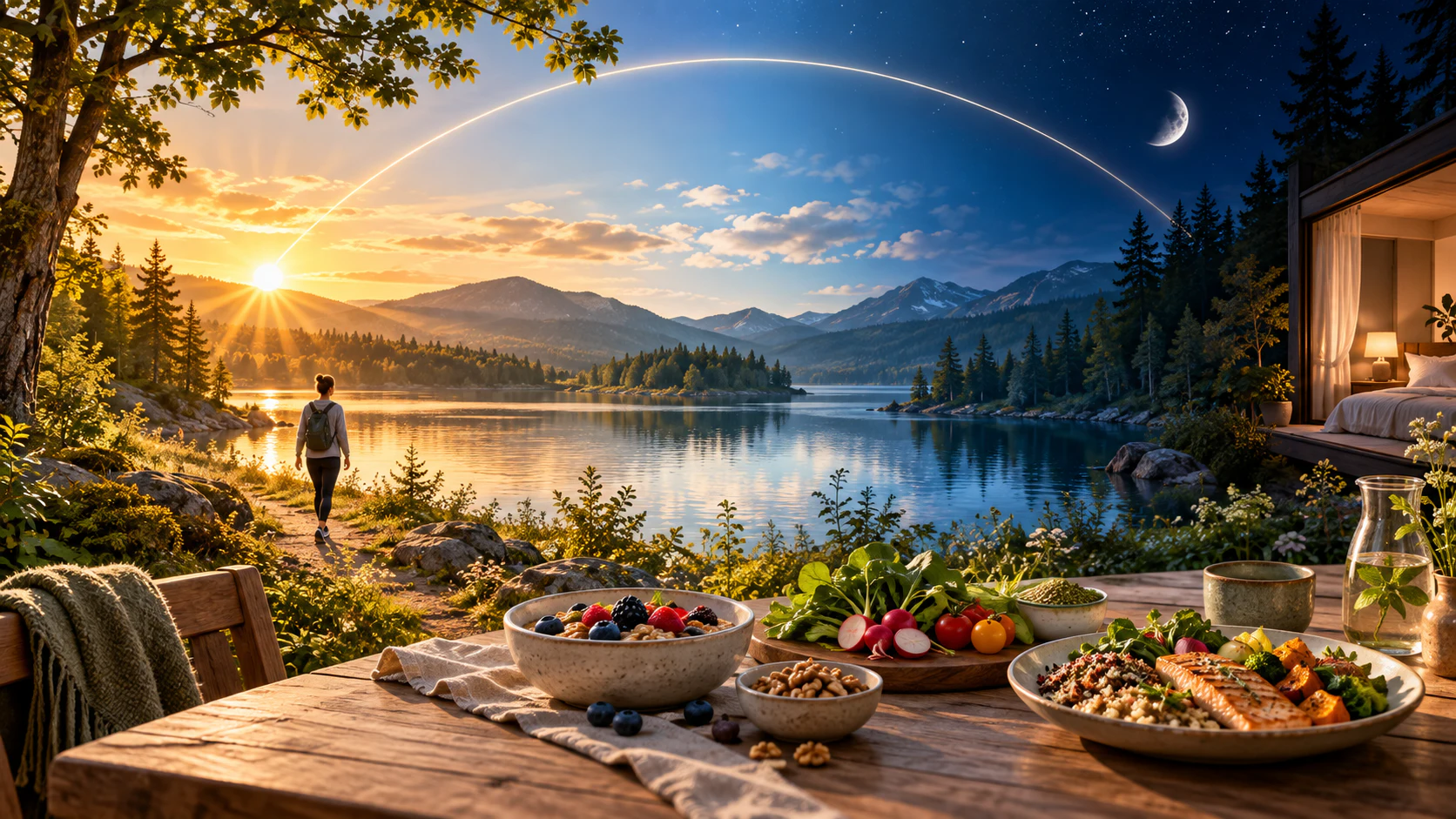
The "Biological Rhythms" course explores the connections between our biological clock, our lifestyle habits, and the cycles of nature—from the 24-hour circadian rhythm to seasonal variations.
Through practical examples and case studies, you will learn to recommend realistic lifestyle adjustments and assess their effects, while distinguishing established scientific knowledge from approaches still under investigation.
The course draws on the reality of life in Quebec: short winter days, long summer days, and a modern lifestyle spent largely indoors. Throughout the chapters, it also identifies the situations that call for a referral to a physician.
Course objectives
By the end of this course, you will be able to:
- explain the main mechanisms of chronobiology and relate them to nature’s cycles;
- describe the rhythms of sleep, wakefulness, eating, activity and recovery;
- recognize the natural signals and behaviours that influence these rhythms;
- take into account each person’s needs, constraints and stage of life;
- recommend habits timed within the day and the year, and justify their timing;
- distinguish established mechanisms, applications still under study and traditional approaches;
- assess the effects of the proposed changes and adjust them during follow-up;
- recognize situations that fall outside the scope of naturopathic support.
Teaching methods included:
- E-Learning training: an interactive, motivating, and effective learning method.
- Printable course booklets
- Access to the student centre
- Videos and virtual library.
Course Content Description
Student Guide
Teaching method and instructions
- How to use your E-learning platform
- Your documents and teaching tools
- Your PDF teaching manual
- Clinical Case Studies (CCS)
- Your study time
- Timelines and duration of the program
- Quizzes
- Evaluations
- Professional and personal status
Getting started
- Plan your work schedule
Introduction
Biological rhythms in naturopathy
- Why study biological rhythms in naturopathy
- Our relationship with nature as a common thread
- General course objectives
- Teaching approach
- Overview of the chapters
- An invitation to self-observation
Chapter 1
The foundations of chronobiology
- Understanding biological rhythms
- A master clock and local clocks
- The signals that provide time cues
- Light and biological time
- Natural cycles and photoperiod
- Meals as metabolic time cues
- Recognizing chronotype
- Social jet lag
- Desynchronization and shift work
- Observe before recommending
- Guided case study
- Review of knowledge
Chapter 2
Nature’s cycles and the body
- Day and night: a contrast in light that we have softened
- Photoperiod and latitude: the example of Quebec
- Living indoors: what studies in natural settings reveal
- The seasons and the body: sleep, mood and activity
- Temperature, climate and the body
- Standard time and daylight saving time
- Lunar cycles: what does the research say?
- The traditional Chinese approach to the seasons
- Practical tips: living with nature’s cycles
- Review of knowledge
Chapter 3
Sleep and recovery
- Why sleep? The functions of sleep
- What sets the timing of sleep: the two-process model
- Sleep architecture: stages and cycles
- How much sleep? Needs by age
- Sleep regularity
- Naps
- The night-time environment
- Caffeine, alcohol and late meals
- Melatonin, cortisol and the shift from night to day
- Bedtime routines
- Sleep disorders: recognizing and referring
- Practical tips for the naturopath
- Review of knowledge
Chapter 4
Wakefulness, alertness and mental performance
- Waking up: a transition, not a switch
- Alertness throughout the day
- Chronotype, time of day and performance
- Attention, memory and learning
- Breaks and the work–rest cycle
- Fatigue, sleepiness or boredom?
- Caffeine: a tool to time carefully
- Daylight and alertness
- Drowsy driving
- Organizing a day of study or work
- Review of knowledge
Chapter 5
Diet and metabolic rhythms (chrononutrition)
- What is chrononutrition?
- Peripheral clocks of the digestive and metabolic systems
- Same plate, different responses depending on the time of day
- Hunger, satiety and hormones
- Breakfast: a nuanced picture
- Late meals and night-time snacking
- The overnight fast and time-restricted eating
- Meal composition according to timing
- Digestion and the microbiota
- Night work and eating
- The time-stamped food diary
- A critical look at popular writing on chrononutrition
- Traditional approach: the organ clock of Chinese medicine
- The level of evidence behind the main recommendations
- Precautions and limits of the naturopath’s role
- Review of knowledge
Chapter 6
Movement and physical activity
- How performance varies over the day
- Exercise as a synchronizer
- Moving outdoors: light, movement and nature
- Mobility, endurance and strength: the Canadian Guidelines
- Sedentary behaviour and active breaks
- Evening exercise and sleep
- Exercise timing and blood sugar
- Recovery, overtraining and the seasons
- Adapting to constraints and health status
- Practical tips: building and assessing
- Review of knowledge
Chapter 7
Stress, emotions and rest periods
- The stress response system and its rhythm
- The autonomic nervous system: speeding up and slowing down
- Acute stress, chronic stress and daily rhythms
- Alternating demand and recovery
- Regulation tools and their level of evidence
- Routines, screens and night-time rumination
- Emotions and the hours of the day
- When to refer
- Practical tips for support
- Review of knowledge
Chapter 8
Rhythms across the lifespan
- A system that develops and changes
- Infancy: a rhythm takes shape
- Childhood: routines, light and screens
- Adolescence: a physiological phase delay
- Adulthood: chronotype and age
- Ageing: phase advance and lighter sleep
- The menstrual cycle
- Pregnancy and postpartum
- Perimenopause and menopause
- Hormonal transitions in men
- Referral signals by age
- Review of knowledge
Chapter 9
Supplements and targeted interventions
- The Canadian framework for natural health products
- Principles before products
- Melatonin: clock or sleeping pill?
- Minerals, amino acids and evening herbs
- Tryptophan and 5-HTP: serotonergic caution
- Caffeine as a tool
- Light therapy
- Interactions and at-risk populations
- Summary table
- Review of knowledge
Chapter 10
Rhythm disruptions
- Shift work and night work
- Coping strategies for night work
- Travel jet lag
- Social jet lag: working the levers
- Clock changes
- Artificial light at night and screens
- Family constraints
- Remote work and blurred schedules
- The modern environment
- Assess, adjust and refer
- Review of knowledge
Chapter 11
Building personalized naturopathic support
- A five-step approach
- Tools for assessing rhythms
- Red flags and medical referral
- Prioritizing and anchoring changes
- Sample days with commentary
- Seasonal adaptations in Quebec
- Three complete case studies
- Assess and adjust
- Ethics, scope of practice, consent and confidentiality
- Review of knowledge
Answer keys and appendices
Answer keys and appendices
- Activity answer key
- Sleep diary
- Time-stamped daily rhythm log
- Interview grid: rhythm assessment
- Signals for referral to a health professional
- Action plan and follow-up
- Glossary
- Essential bibliography and resources